Diesel Air Heater Buying Guide: Vertical vs Horizontal All-in-One Models Explained
2026-10-12 20:51:28
What Is a Diesel Air Heater?
A diesel air heater is a self-contained combustion heating unit that draws a small amount of diesel fuel from the vehicle tank, burns it inside a sealed combustion chamber, and transfers the heat to fresh air blown into the cabin, sleeper, RV, boat, workshop, or workspace. Because it works independently of the engine, it delivers reliable warmth in cold weather without idling the engine, saving fuel, reducing engine wear, and cutting cold-start emissions.
Modern units are commonly rated by heating output (2 kW, 5 kW, and 8 kW) and by voltage (12 V for cars and RVs, 24 V for trucks and buses). Two popular layouts are the vertical all-in-one diesel air heater and the horizontal all-in-one diesel air heater. The phrase all-in-one means the burner, heat exchanger, combustion fan, fresh-air blower, fuel pump, and electronic control unit are pre-assembled in a single housing for faster and cleaner installation.
How a Diesel Air Heater Works
When the driver sets a target temperature, the control unit starts the combustion fan and the metering fuel pump. Atomized diesel ignites on the glow plug, and heat passes through the heat-exchanger walls without mixing with the cabin air. The blower pushes warmed air through ducted outlets, while exhaust gases and combustion air are vented outside through a separate exhaust pipe. Studies of fuel-operated auxiliary heaters show that particle peaks occur mainly during start-up and shut-down, whereas steady-state operation is comparatively clean, which is why modern units pre-heat quickly and then stabilize at a low emission rate.
Vertical All-in-One Diesel Air Heater
The vertical model stands upright. Its compact footprint and tall, narrow body suit installations where floor space is limited, such as under a truck sleeper bench, inside an RV wardrobe cabinet, in a horse-trailer tack room, or in a compact equipment cabin.
The main advantages are a small floor footprint ideal for tight compartments, natural airflow and shorter duct runs in vertical installations, clean separation of intake, exhaust, and warm-air outlets, and availability in 2 kW, 5 kW, and 8 kW versions for 12 V or 24 V systems. It is often the preferred choice when the mounting bay is taller than it is wide and when service access from above is convenient.
Horizontal All-In-One Diesel Air Heater
The horizontal model lies flat along its long axis. Its low profile makes it easy to mount beneath seats, under camper-van floors, inside boat galleys, or flush with a bulkhead where headroom is restricted.
The main advantages are a low, flat profile for under-seat and under-floor installations, even weight distribution on horizontal mounting surfaces, straightforward ducting to the front and rear of a cabin, and the same 2 kW, 5 kW, and 8 kW power range in 12 V and 24 V. Buyers in campervan, motorhome, and marine refits frequently choose the horizontal unit because it hides neatly inside existing floor cavities.
Vertical vs Horizontal: Which Should You Choose?
The decision is driven mainly by available mounting space, not by heating performance. Choose the vertical model when the bay is narrow and tall, such as a truck sleeper cabinet or a compact equipment enclosure. Choose the horizontal model when space is wide and shallow, such as under a van seat, an RV bench, or a boat locker.
Both layouts share the same burner technology, fuel pump, and control logic, so comfort, fuel consumption, and noise levels are comparable. Always match the output to the cabin volume: 2 kW for small cabins and vans, 5 kW for trucks and motorhomes, and 8 kW for large vehicles, workshops, or very cold climates.
Fuel Consumption, Efficiency, and Emissions
A typical 5 kW diesel air heater consumes roughly 0.1 to 0.5 liters of diesel per hour depending on the power level, far less than idling a large diesel engine. Published measurements of fuel-operated auxiliary heaters report thermal efficiencies around 80% or higher and show that emission peaks concentrate during ignition and shut-down. Good maintenance, including cleaning the burner chamber, replacing the fuel filter, and bleeding air from the fuel lines, keeps combustion efficient and smoke-free.
Installation and Safety Tips
Mount the unit on a flat, rigid surface away from fuel vapors. Route the exhaust and combustion-air pipes to the outside and secure them against heat and vibration. Fit the fuel pump at the correct angle and distance from the tank. Use the correct voltage, 12 V or 24 V, and a properly sized battery. Never run the heater in a fully enclosed, unventilated space.
Conclusion
Whether you need a vertical all-in-one diesel air heater for a tall, narrow compartment or a horizontal all-in-one diesel air heater for a low, wide installation, the core value is the same: efficient, independent warmth that lets you stop idling and keep working or resting comfortably. Match the model to your mounting space, choose 2 kW, 5 kW, or 8 kW by cabin size, and install the exhaust and fresh-air ducts correctly for years of reliable service.
References
Sources indexed on Google Scholar: Karjalainen, P., Nikka, M., Olin, M., et al. Particle number, mass, and black carbon emissions from fuel-operated auxiliary heaters in real vehicle use. Environmental and Sustainability Indicators, 2022.
Testing method for electric bus auxiliary heater emissions. Energies, MDPI, 2023, 16(8): 3578.
The role of fuel and environmental conditions on aerosol emissions from diesel- and gasoline-operated auxiliary heaters of passenger cars. Atmospheric Measurement Techniques, 2025, 18: 4271.
Effect of the air flow on the combustion process and preheating effect of the intake manifold burner. Energies, MDPI, 2022, 15(9): 3260.
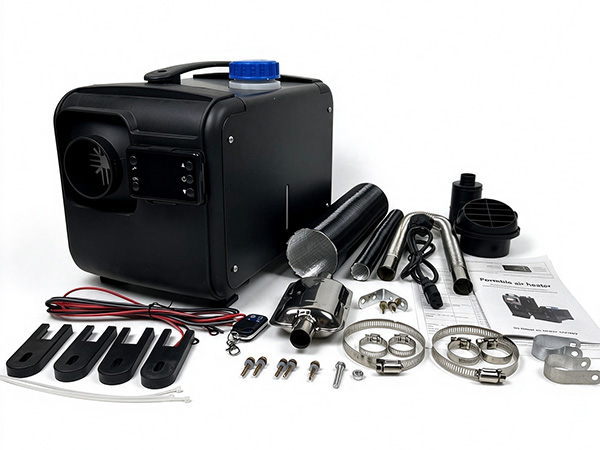
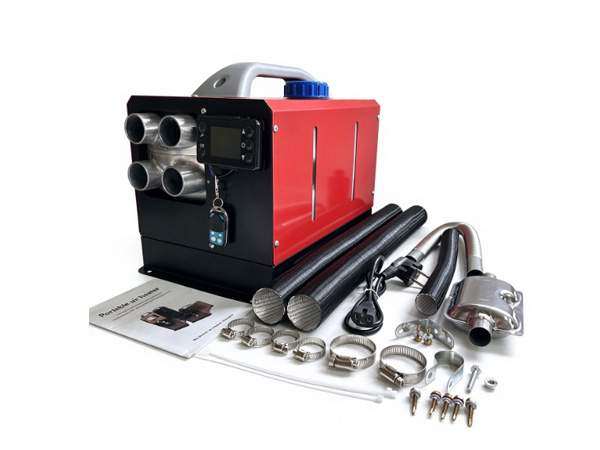
Note: The types and quantities of accessories can be adjusted according to customer require...
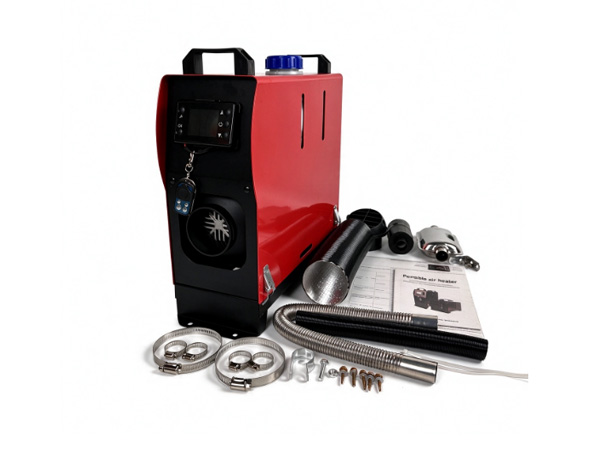
Diesel air heater 5KW/8KW Product Usage: Used for heating small spaces, suitable for small ...
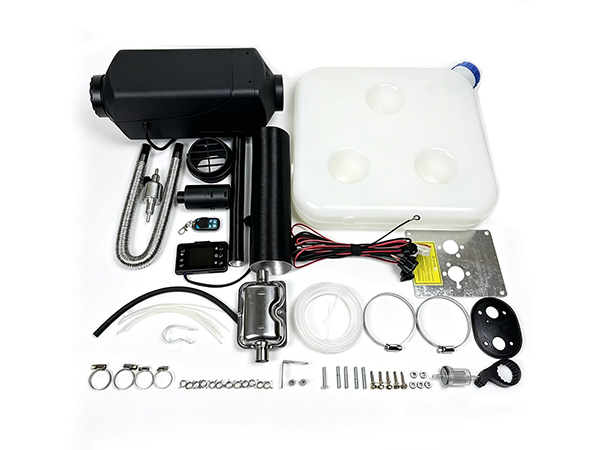
Product Specifications: Rated voltage:12V/24V/12V-24V Rated current:16A Thermal power:...