How Should the Exhaust of a Horizontal All-in-One Diesel Air Heater Slope to Drain Condensation?
2026-10-14 17:51:26
Condensation in an exhaust pipe is unavoidable whenever hot, moist exhaust meets cold metal. For a horizontal all-in-one diesel air heater, the way the exhaust slopes decides whether that water drains away or freezes into a blockage. A small detail of routing prevents winter shutdowns.
Why Water Forms in the Pipe
Burning diesel produces water vapor, which condenses on cooler sections of the exhaust. In cold weather that liquid can collect at the lowest point of the run. If the pipe sits flat or dips near the heater, the water settles there and turns to ice.
Sloping Away From the Unit
The exhaust should fall gently from the heater outlet to its outside tip, so moisture travels outward with the gas flow rather than flowing back. No downward dip should sit between the heater and the exit. This keeps the low point at the open end, where drips are harmless.
Checking in Cold Weather
After the first frost, a quick look at the exhaust outlet confirms whether drips are leaving rather than forming icicles. Adding a small drain hole at the lowest point, or insulating the coldest section, further reduces freezing. Correct slope means the heater starts cleanly even after a hard night.
Signs the Slope Is Wrong
If an exhaust outlet begins to drip or form icicles where it meets the heater, the pipe is trapping water rather than draining it outward. That trapped water freezes and can restrict the gas flow, making the heater run rich and smoke briefly. Re-sloping the run so the lowest point sits at the open tip clears the problem.
Where a long pipe must pass through a cold space, a gentle heat wrap on the coldest section reduces condensation freezing. Correct drainage means the heater starts cleanly on the first attempt even after the coldest night.
References
GB/T 7714: GUO R, LI L, SUN Z, et al. An integrated thermal management strategy for cabin and battery heating in range-extended electric vehicles under low-temperature conditions [J]. Applied Thermal Engineering, 2023, 228: 120502.
APA 7th: Guo, R., Li, L., Sun, Z., & Xue, X. (2023). An integrated thermal management strategy for cabin and battery heating in range-extended electric vehicles under low-temperature conditions. Applied Thermal Engineering, 228, 120502.
MLA 9th: Guo, R., et al. "An Integrated Thermal Management Strategy for Cabin and Battery Heating in Range-Extended Electric Vehicles under Low-Temperature Conditions." Applied Thermal Engineering, vol. 228, 120502.
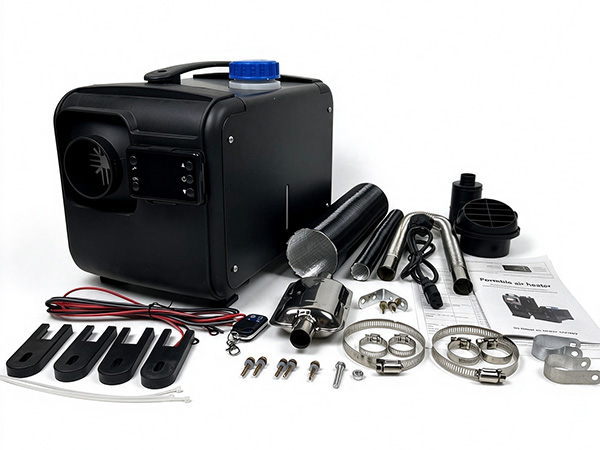
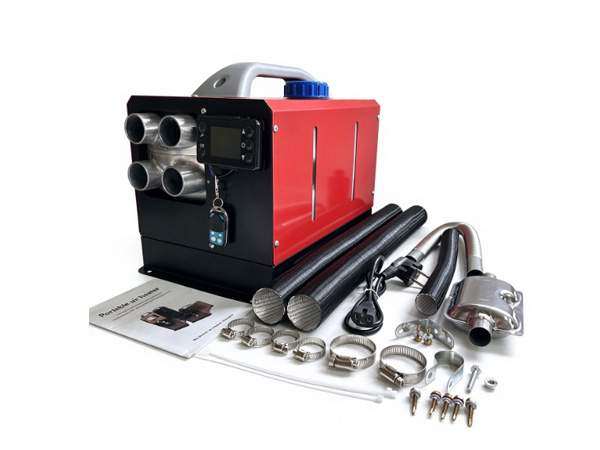
Note: The types and quantities of accessories can be adjusted according to customer require...
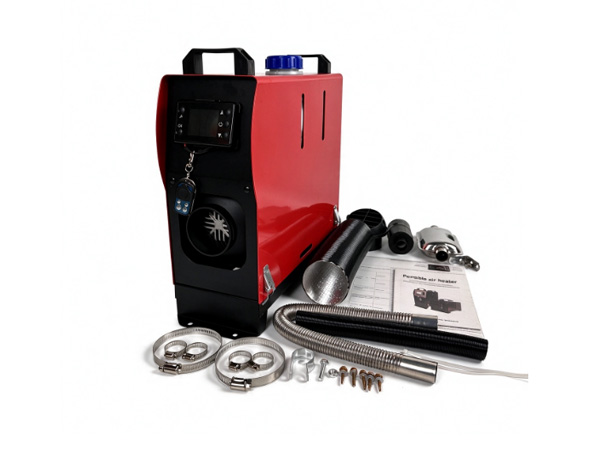
Diesel air heater 5KW/8KW Product Usage: Used for heating small spaces, suitable for small ...
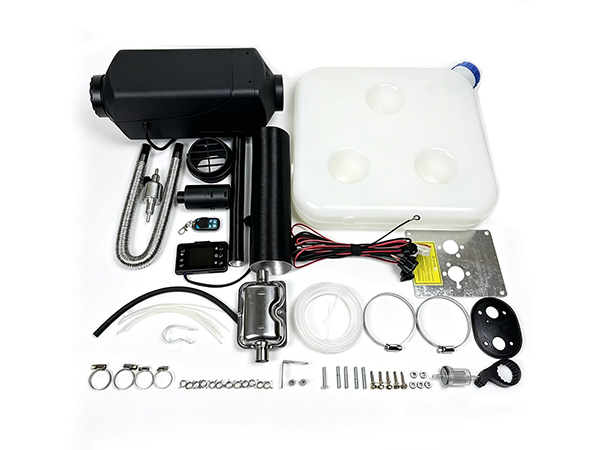
Product Specifications: Rated voltage:12V/24V/12V-24V Rated current:16A Thermal power:...