Diesel Air Heater Installation Guide
2026-10-13 17:46:49
A diesel air heater is one of the most cost-effective ways to keep a truck cabin, caravan, workshop or boat warm in cold weather, but its reliability, fuel economy and service life depend almost entirely on the quality of the installation. This guide walks through the key steps of mounting, plumbing, wiring and testing a 12V or 24V diesel air heater so that it runs safely and quietly for years.
Why a Correct Installation Matters
A poorly installed auxiliary heater can burn extra fuel, blow uneven warm air, vibrate loudly or even introduce exhaust fumes into the living space. Taking time to plan the position, route the pipes correctly and secure every connection prevents call-backs and protects passengers from exhaust risk. Independent studies on fuel-operated auxiliary heaters show that they are a real source of vehicular emissions in cold regions, so routing the exhaust safely away from occupied areas is a non-negotiable safety step.
Planning Before You Start
Choose a flat, rigid surface close to the battery and the fuel tank, but away from direct heat sources and moving parts. Confirm the system voltage matches the vehicle: most passenger vans and caravans use a 12V diesel air heater, while heavy trucks and buses usually run on 24V. Measure the available length for the exhaust pipe, silencer, combustion air intake and fuel line before drilling any holes, and keep the combustion air intake separate from the warm air outlet ducts.
Mounting the Heater Unit
Fix the mounting bracket with vibration-damping rubber mounts so that the fan and fuel pump do not transfer noise into the bodywork. Tilt the unit slightly toward the exhaust outlet to let condensation drain away freely. The warm air ducts should be as short and straight as possible, insulated where they pass through cold panels, and terminated at the points where heat is actually needed rather than blowing wastefully into open space.
Fuel, Exhaust and Electrical Connections
Tap the fuel line from a low point of the tank with the supplied dosing pump, and fit a small inline filter to protect the pump from dirt. Route the exhaust pipe downward, away from doors and windows, and fit the silencer as close to the heater as practical. Connect the positive and negative battery cables with the correct cable gauge, add an in-line fuse near the battery, and mount the control panel where the driver can reach it without being distracted from the road.
First Test Run
Before closing everything up, switch the heater on to a low setting and let it go through its full ignition cycle. Listen for a steady combustion note, check the exhaust joints for leaks, and verify that the outlet air warms up within a few minutes. Monitor the fuel consumption during the first hour; a typical 2kW unit should burn only a few tenths of a litre per hour. If the flame is unstable, bleed the fuel line and repeat the ignition sequence.
Common Mistakes to Avoid
Do not mount the combustion air intake where it can suck exhaust gas or rain water. Do not over-tighten the exhaust clamps, which can crack the stainless pipe, and do not run the power cable bundled tightly alongside the fuel line. If the heater cycles on and off repeatedly, re-check the fuel pump timing and the altitude setting, especially when the vehicle is used at high elevation.
References
Karjalainen, P., Nikka, M., Olin, M., Martikainen, S., Rostedt, A., Arffman, A., & Mikkonen, S. (2021). Fuel-operated auxiliary heaters are a major additional source of vehicular particulate emissions in cold regions. Atmosphere, 12, 1105.
Oikarinen, H., Olin, M., Martikainen, S., Leinonen, V., Mikkonen, S., & Karjalainen, P. (2022). Particle number, mass, and black carbon emissions from fuel-operated auxiliary heaters in real vehicle use. Atmospheric Environment: X.
Zietsman, J., Johnson, J., Ramani, T., Farzaneh, R., Rodgers, M., Samoylov, A., Xu, Y., & Moore, A. (2015). Effectiveness of idle reduction technologies in reducing driver exposure to diesel emissions. Transportation Research Record: Journal of the Transportation Research Board.
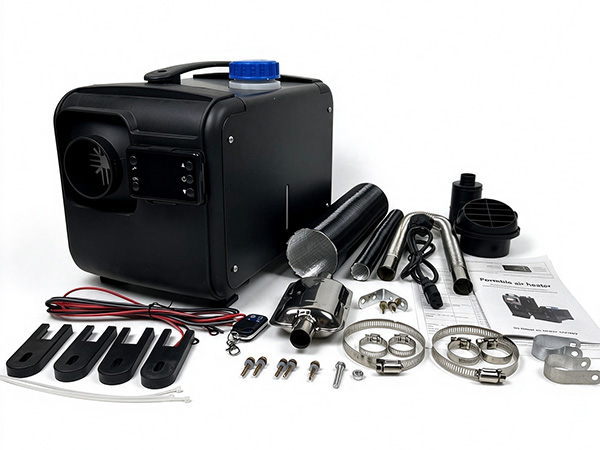
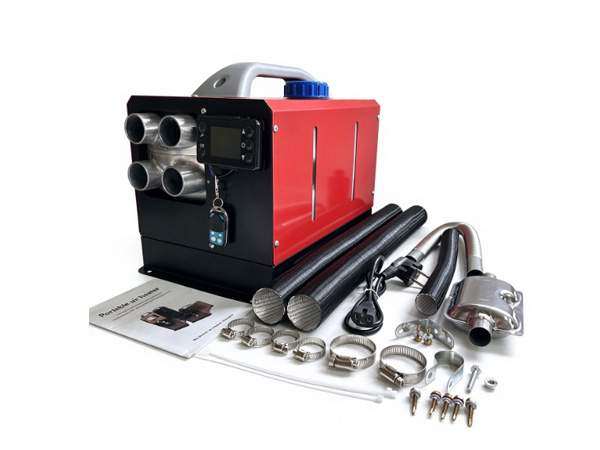
Note: The types and quantities of accessories can be adjusted according to customer require...
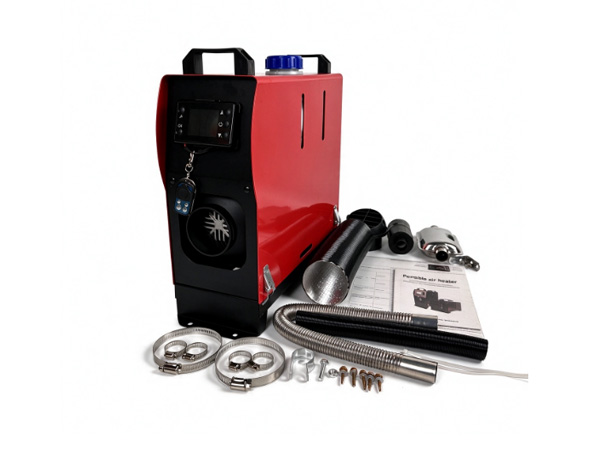
Diesel air heater 5KW/8KW Product Usage: Used for heating small spaces, suitable for small ...
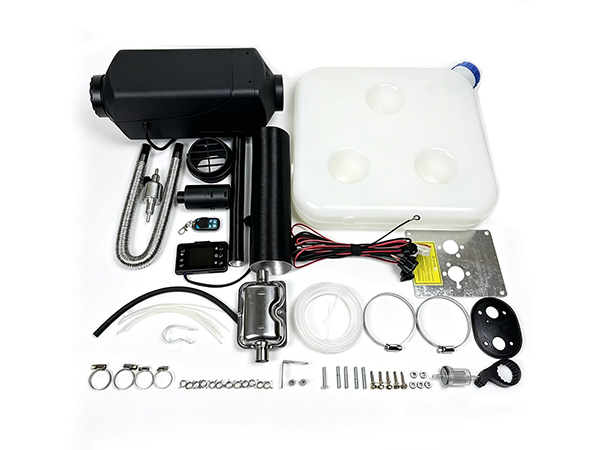
Product Specifications: Rated voltage:12V/24V/12V-24V Rated current:16A Thermal power:...