Horizontal Diesel Air Heater Guide
2026-10-13 17:47:45
What Is a Horizontal Diesel Air Heater
A horizontal diesel air heater is a compact, fuel-burning cabin heater that mounts flat instead of standing upright. It draws clean air, heats it through a heat exchanger, and blows warm air into living spaces while exhausting combustion gases outside. Because the unit lies on its side, it fits under benches, inside seat bases, or beneath bunks where a vertical heater would not fit.
How It Works
The heater pulls a small amount of diesel from the vehicle tank, burns it in a sealed combustion chamber, and transfers the heat to a separate air stream. The combustion air and exhaust are kept completely isolated from the cabin air, so no fumes enter the living space. A fuel pump feeds diesel in pulses, a glow plug ignites the mixture, and a centrifugal fan controls both combustion airflow and warm-air delivery.
Why Choose a Horizontal Layout
The main advantage of the horizontal design is space saving. Low-profile mounting lets installers tuck the heater into tight cavities common in RVs, camper vans, boat cabins, and enclosed trailers. It also simplifies routing a single warm-air outlet through ducting to the area that needs heat most. The flat form factor often makes service access easier because the top covers and connectors stay reachable.
Choosing the Right Power Size
Selecting the correct output depends on cabin volume, insulation, and climate. A small 2 kilowatt unit suits a van cabin or a weekend boat. A 5 kilowatt unit handles a larger motorhome or a work trailer in cold weather. An 8 kilowatt unit is reserved for big spaces or very low ambient temperatures. Oversizing shortens heater life through frequent cycling, while undersizing leaves the space cold on frosty nights.
Installation Basics
Mount the heater on a rigid, heat-resistant surface with the intake and exhaust routed to the outside. Keep the exhaust away from air intakes and living areas. Run a separate fuel line from the tank with the correct lift pump, and size the wire gauge for the current draw. Seal every duct joint so warm air does not leak into hidden cavities.
Maintenance Tips
Drain the fuel filter, clean the air intake filter, and inspect the exhaust pipe for soot or blockage each season. Run the heater once a month even in summer to keep the fuel pump and seals working. Let the unit cool completely before switching it off at the source.
References
Oikarinen, H., Olin, M., Martikainen, S., Leinonen, V., Mikkonen, S., & Karjalainen, P. (2022). Particle number, mass, and black carbon emissions from fuel-operated auxiliary heaters in real vehicle use. Atmospheric Environment: X.
Karjalainen, P., Nikka, M., Olin, M., Martikainen, S., Rostedt, A., Arffman, A., & Mikkonen, S. (2021). Fuel-operated auxiliary heaters are a major additional source of vehicular particulate emissions in cold regions. Atmosphere, 12, 1105.
Zietsman, J., Johnson, J., Ramani, T., Farzaneh, R., Rodgers, M., Samoylov, A., Xu, Y., & Moore, A. (2015). Effectiveness of idle reduction technologies in reducing driver exposure to diesel emissions. Transportation Research Record: Journal of the Transportation Research Board.
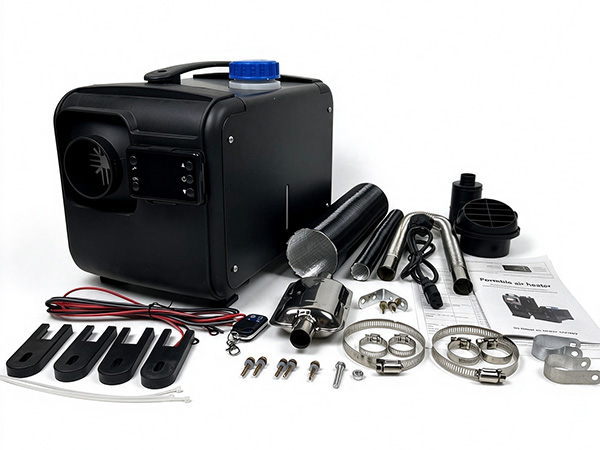
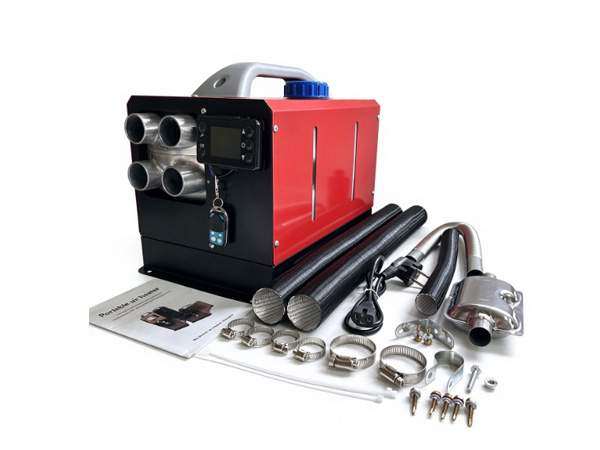
Note: The types and quantities of accessories can be adjusted according to customer require...
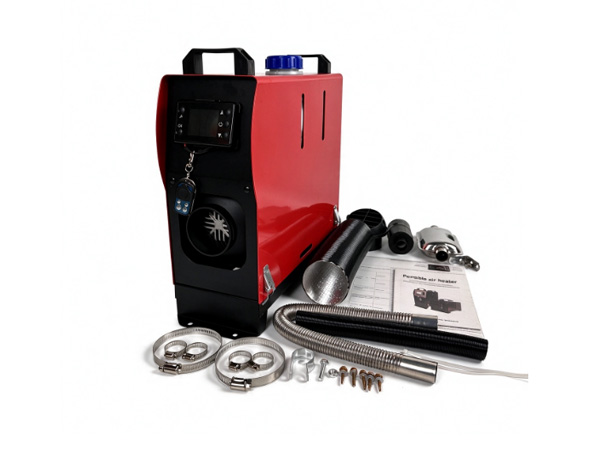
Diesel air heater 5KW/8KW Product Usage: Used for heating small spaces, suitable for small ...
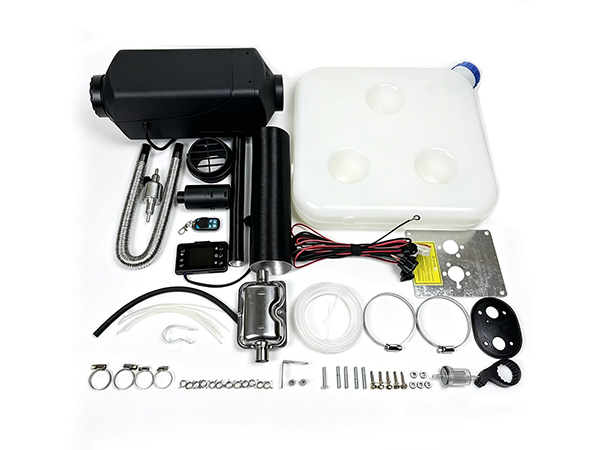
Product Specifications: Rated voltage:12V/24V/12V-24V Rated current:16A Thermal power:...