Vertical Diesel Heater for Vans
2026-10-13 17:58:07
Van conversions live or die by usable space, and the heating system is often the hardest item to fit. A vertical diesel heater for vans is built to stand in a narrow locker, heat the living area efficiently and run quietly through the night. This guide explains how to choose and use one in a converted van.
Why Vans Favour a Vertical Heater
A van interior has limited depth under the bed and benches, which makes a long horizontal heater awkward. The vertical body tucks into a cupboard plinth, a kitchen unit or the void beside the passenger seat, turning dead space into a heating bay. Because the heater shares the van's diesel tank, there is no gas bottle to stow, which leaves more room for kit and water. For converters, the vertical format is the default choice for clean, space-efficient heating.
Heat Sizing for a Camper Van
A typical two-berth panel van conversion needs about 2 kW of heating for winter comfort. A larger four-berth van with a fixed washroom and big windows may need 5 kW. Rather than sizing by the van's overall length, measure the insulated volume and account for how well the walls and floor are insulated. A heater that modulates down to a gentle flame holds overnight temperature better than one that bangs on and off.
Running It Off the Van Electrics
The heater runs on the van electrical system, usually 12V in a converted van. It draws more during start-up, when the glow plug and fan both energise, then settles to a low draw. Pair it with a leisure battery and the van's split-charger or solar setup. Set the low-voltage cut-off so the heater stops before it drains the battery flat, leaving enough charge to start the engine in the morning.
Quiet Heating Overnight
Because people sleep a few metres from the heater, fan noise matters. On a low economy setting the vertical heater should hum softly rather than whine. Fit the exhaust with the recommended silencer and mount the duct with flexible connectors so fan vibration is not transmitted through the cabinet. A well-installed van heater lets the occupants sleep while keeping the van warm and condensation-free.
Install and Service Tips
Route the exhaust to exit low and outside, keep the combustion intake separate from the warm air duct, and seal every joint. Leave an access panel for the glow plug and fuel filter. Bleed the fuel line before the first start, then run through a couple of cycles to confirm the flame is steady. With a tidy vertical install, the heater fades into the furniture and simply works when the temperature drops.
References
Oikarinen, H., Olin, M., Martikainen, S., Leinonen, V., Mikkonen, S., & Karjalainen, P. (2022). Particle number, mass, and black carbon emissions from fuel-operated auxiliary heaters in real vehicle use. Atmospheric Environment: X.
Karjalainen, P., Nikka, M., Olin, M., Martikainen, S., Rostedt, A., Arffman, A., & Mikkonen, S. (2021). Fuel-operated auxiliary heaters are a major additional source of vehicular particulate emissions in cold regions. Atmosphere, 12, 1105.
Zietsman, J., Johnson, J., Ramani, T., Farzaneh, R., Rodgers, M., Samoylov, A., Xu, Y., & Moore, A. (2015). Effectiveness of idle reduction technologies in reducing driver exposure to diesel emissions. Transportation Research Record: Journal of the Transportation Research Board.
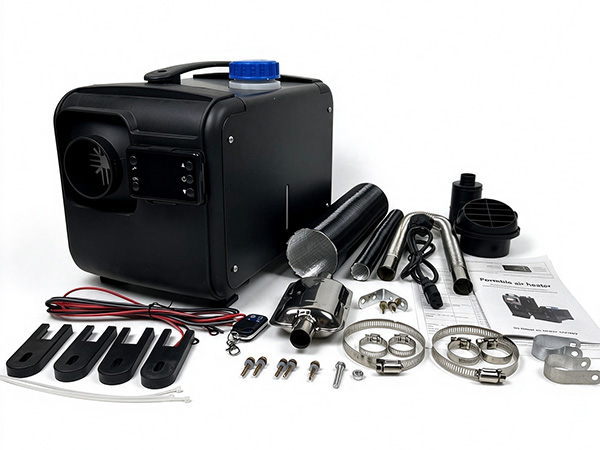
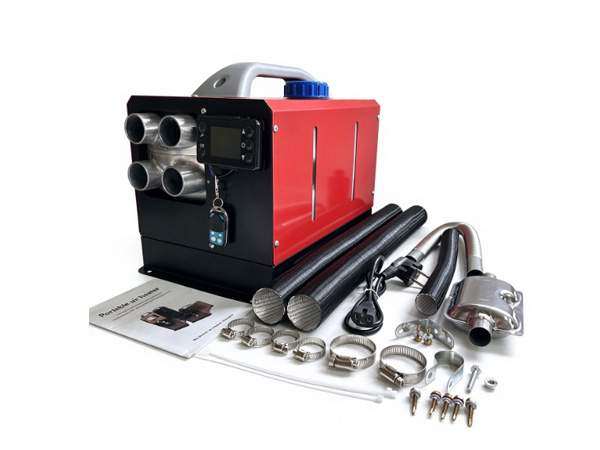
Note: The types and quantities of accessories can be adjusted according to customer require...
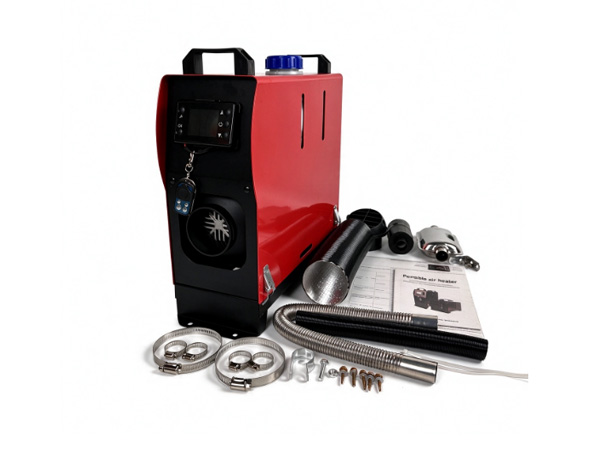
Diesel air heater 5KW/8KW Product Usage: Used for heating small spaces, suitable for small ...
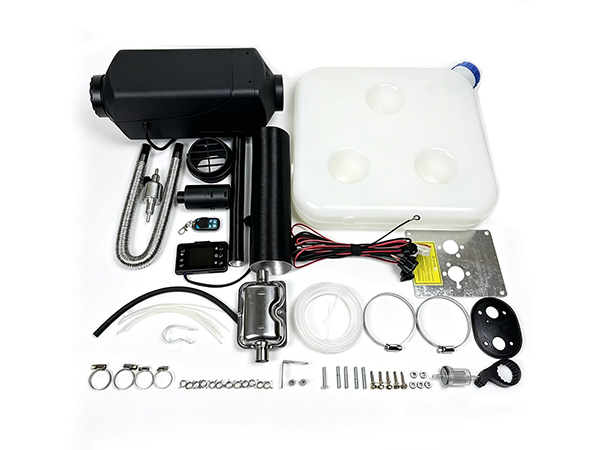
Product Specifications: Rated voltage:12V/24V/12V-24V Rated current:16A Thermal power:...