Diesel Air Heater for Camping and RV
2026-10-13 17:56:15
For van lifers, weekend campers and full-time motorhome travellers, the question of warmth is rarely about luxury. A reliable cabin temperature makes wild camping in autumn and winter comfortable, and a diesel air heater has become the standard choice because it heats the living space directly without running the engine. This article looks at why these heaters suit camping and RV life, and how to size and power one correctly.
Why Campers and RV Owners Choose Diesel Air Heaters
Unlike a portable bottled-gas heater, a diesel air heater draws fuel straight from the vehicle's own tank, so there is no gas bottle to swap or run out of. It warms a small insulated space efficiently, dries damp bedding on wet mornings, and can run overnight on a fraction of a tank of fuel. Because it is a sealed-combustion unit that takes its air and exhaust from outside the vehicle, it is far safer than an open-flame heater in a closed living area.
Choosing the Right Size for Your Van or Motorhome
A 2kW heater is usually enough for a converted van, a small camper or a truck cab, keeping the space warm with modest fuel use. A 5kW unit suits a larger motorhome or a family caravan where more than one berth needs heating. Oversizing wastes fuel and causes the heater to cycle on and off, while undersizing leaves the space cool on very cold nights. Consider the insulation, the window area and the lowest temperature you expect to face.
Power Supply and Battery Setup
Most camper and RV installations use a 12V diesel air heater tied to a dedicated leisure battery rather than the engine battery. Add a battery monitor and, if possible, solar panels so that overnight heating does not leave the starter battery flat. A properly sized cable and an in-line fuse protect the circuit, while a voltage monitor on the control panel prevents the heater from draining the battery to the point where the vehicle will not start.
Installation Tips for Vans
Mount the heater low in a bench or under a seat where it is out of the way but accessible for servicing. Run the exhaust and combustion pipes through a sealed floor grommet, and route the warm air ducts to the sleeping area and living area with as few bends as possible. Insulate the ducts so that heat is not lost under the floor. Keep the fuel pickup below the tank level so the heater can draw fuel even when the tank is partly used.
Comfort and Safety on the Road
Set the thermostat a few degrees lower than the cabin target to avoid condensation, which is the enemy of van insulation. Crack a roof vent slightly while the heater runs to exchange stale air without losing much warmth. Always park with the exhaust pointing away from doors and windows, and never run the heater in a closed garage or tent. With these habits, a diesel air heater makes wild camping comfortable well into the colder months.
References
Karjalainen, P., Nikka, M., Olin, M., Martikainen, S., Rostedt, A., Arffman, A., & Mikkonen, S. (2021). Fuel-operated auxiliary heaters are a major additional source of vehicular particulate emissions in cold regions. Atmosphere, 12, 1105.
Zietsman, J., Johnson, J., Ramani, T., Farzaneh, R., Rodgers, M., Samoylov, A., Xu, Y., & Moore, A. (2015). Effectiveness of idle reduction technologies in reducing driver exposure to diesel emissions. Transportation Research Record: Journal of the Transportation Research Board.
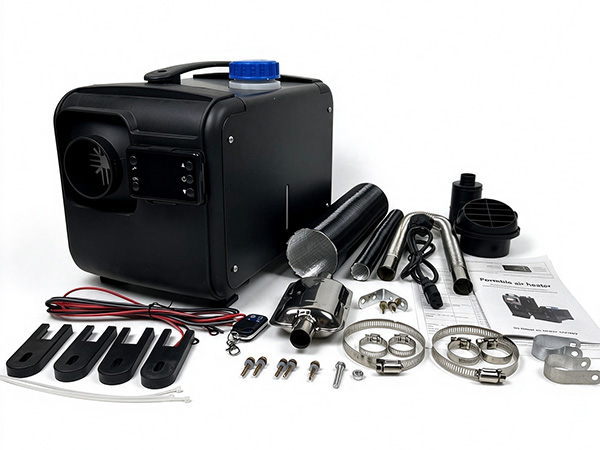
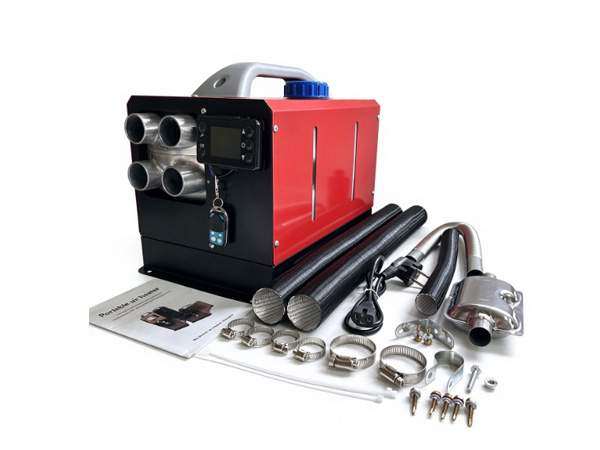
Note: The types and quantities of accessories can be adjusted according to customer require...
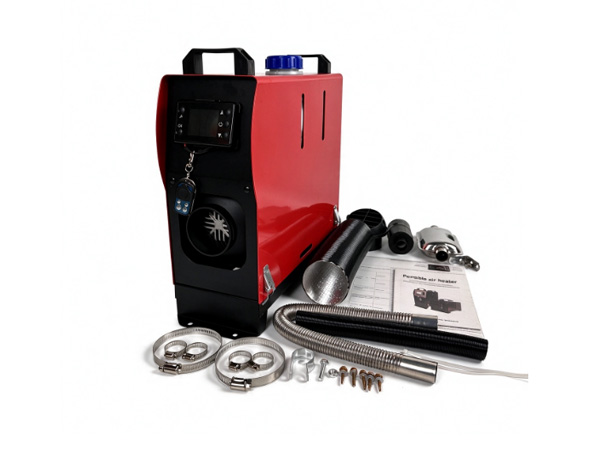
Diesel air heater 5KW/8KW Product Usage: Used for heating small spaces, suitable for small ...
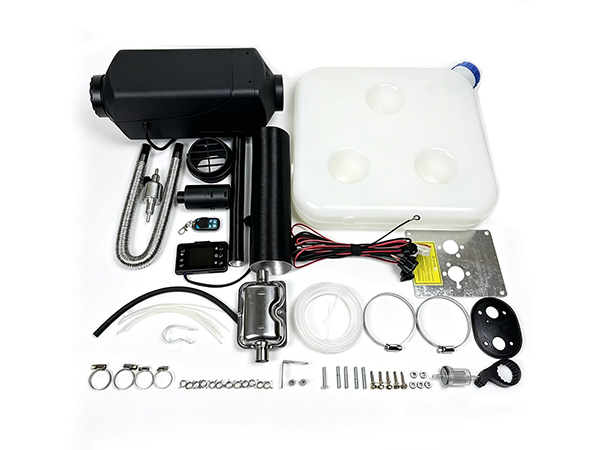
Product Specifications: Rated voltage:12V/24V/12V-24V Rated current:16A Thermal power:...