Why Is Combustion Air Drawn From Outside the Vehicle on a Diesel Air Heater?
2026-10-14 17:36:25
A defining safety feature of a diesel air heater is that its burner never relies on the air inside the living space. The combustion air supply runs from outside the vehicle, through a dedicated inlet, into the chamber. This design choice is central to safe overnight use in a closed cab or camper.
Protecting Indoor Oxygen
If the burner drew cabin air for combustion, it would steadily consume the oxygen people are breathing and replace it with dry, recirculated air. By drawing fresh air from outside, the heater leaves the interior oxygen level untouched. The warmed air that circulates inside is simply passed across the exchanger, not burned.
Keeping Exhaust Out of Reach
A dedicated external intake also means the combustion circuit is sealed from the living area. Any exhaust gases stay on the outlet side of the heat exchanger and are vented outside. This separation is what allows the heater to run while the vehicle is closed up against the cold.
Installing the Intake Correctly
The intake must sit where it draws clean, cool air and cannot ingest exhaust fumes from the tailpipe. Routing both intake and exhaust to the outside, with the intake separated from the exhaust outlet, preserves the closed-circuit design. Blocking or reversing these ducts defeats the safety logic and should be corrected before use.
What the Installation Must Preserve
The separation of air paths only holds if the ducts remain intact. A cracked intake hose can draw cabin air into the burner, while a leaking exhaust joint can push fumes back inside. Inspecting the intake and exhaust seals, and avoiding temporary tape fixes, keeps the combustion circuit truly closed. Routing both ducts through the bulkhead with sealed grommets prevents leaks around the holes.
Because the heater warms people without consuming their air, it is a comfort device rather than a ventilation one. Owners still benefit from a brief daily airing to refresh interior oxygen and moisture, even while the sealed combustion circuit handles its own air.
References
GB/T 7714: NABI M N, RASUL M G, ANWAR M, et al. Energy, exergy, performance, emission and combustion characteristics of diesel engine using new series of non-edible biodiesels [J]. Renewable Energy, 2019, 140: 647-657.
APA 7th: Nabi, M. N., Rasul, M. G., Anwar, M., & Mullins, B. J. (2019). Energy, exergy, performance, emission and combustion characteristics of diesel engine using new series of non-edible biodiesels. Renewable Energy, 140, 647-657.
MLA 9th: Nabi, M. N., et al. "Energy, Exergy, Performance, Emission and Combustion Characteristics of Diesel Engine Using New Series of Non-Edible Biodiesels." Renewable Energy, vol. 140, 2019, pp. 647-657.
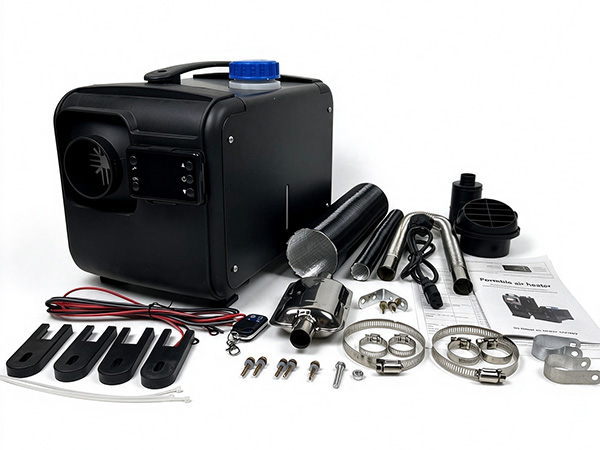
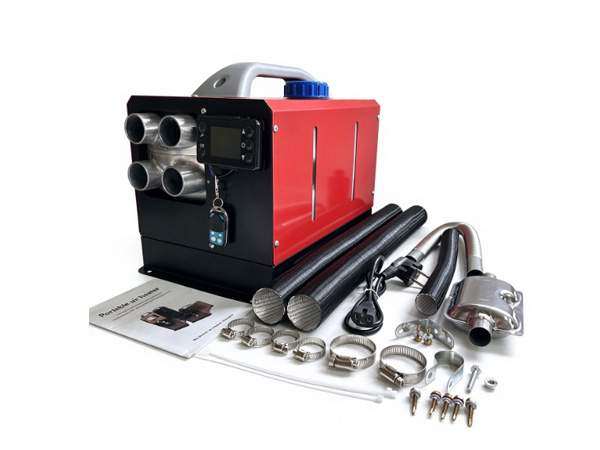
Note: The types and quantities of accessories can be adjusted according to customer require...
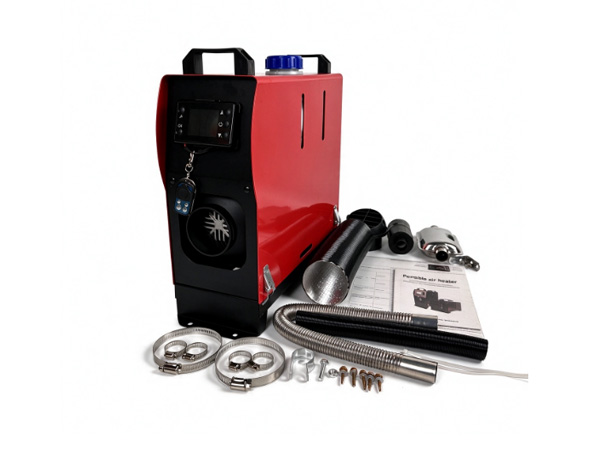
Diesel air heater 5KW/8KW Product Usage: Used for heating small spaces, suitable for small ...
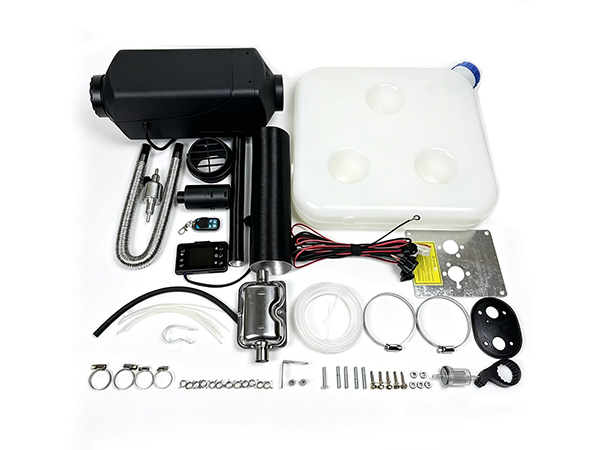
Product Specifications: Rated voltage:12V/24V/12V-24V Rated current:16A Thermal power:...