Horizontal Diesel Air Heater for RV
2026-10-13 17:54:30
Why RV Owners Choose a Horizontal Diesel Air Heater
RV living changes completely when you can hold a comfortable temperature without running the main engine or relying on electric hook-up. A horizontal diesel air heater burns a small amount of diesel to deliver steady warm air through ducting, and it runs quietly enough for sleeping. Because it mounts flat, it fits into the spare cavities found under RV seats, benches, and beds where a bulky vertical heater would never fit.
Sizing for Your RV
Start with the interior volume of the habitation area and the quality of insulation. A well-insulated camper van often manages with a 2 kilowatt heater. A mid-size motorhome that lives in cool climates usually needs 5 kilowatts. A large class A coach or a poorly insulated trailer may require 8 kilowatts. A heater that is too small strains to keep up on cold nights, while one that is too large cycles on and off noisily.
Ideal Mounting Positions
The most common locations are under a dinette bench, beneath the bed, or inside a rear garage compartment. The unit must sit on a firm, heat-resistant surface with clearance around the exhaust. The warm-air outlet should connect to ducting that runs to the living area, and the exhaust must discharge well away from doors, windows, and air intakes.
Fuel and Power Considerations
Most owners draw diesel directly from the RV tank using a small lift pump, while others use a dedicated auxiliary tank. The heater also consumes a small amount of battery power to run the fan and pump, so a healthy leisure battery or solar setup is advisable. At typical consumption rates, a full tank of diesel can heat an RV for many nights of boondocking.
Quiet Night Operation
Modern horizontal heaters offer low-speed modes that keep the cabin warm at a whisper. Placing the heater in a sealed compartment and routing the exhaust through a silencer further reduces noise. Set the thermostat to a modest night temperature and let the heater modulate, rather than running at full power.
References
Zietsman, J., Johnson, J., Ramani, T., Farzaneh, R., Rodgers, M., Samoylov, A., Xu, Y., & Moore, A. (2015). Effectiveness of idle reduction technologies in reducing driver exposure to diesel emissions. Transportation Research Record: Journal of the Transportation Research Board.
Oikarinen, H., Olin, M., Martikainen, S., Leinonen, V., Mikkonen, S., & Karjalainen, P. (2022). Particle number, mass, and black carbon emissions from fuel-operated auxiliary heaters in real vehicle use. Atmospheric Environment: X.
Karjalainen, P., Nikka, M., Olin, M., Martikainen, S., Rostedt, A., Arffman, A., & Mikkonen, S. (2021). Fuel-operated auxiliary heaters are a major additional source of vehicular particulate emissions in cold regions. Atmosphere, 12, 1105.
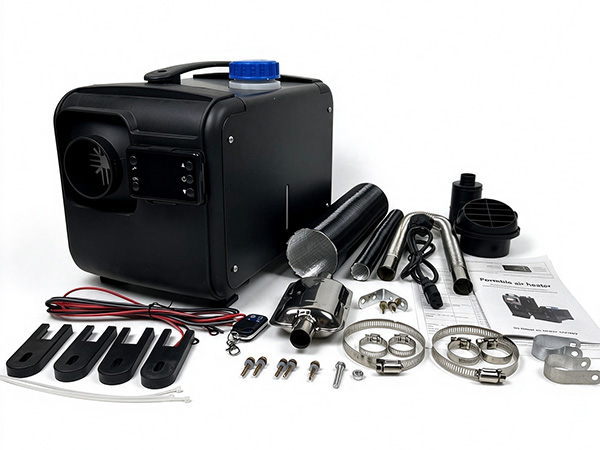
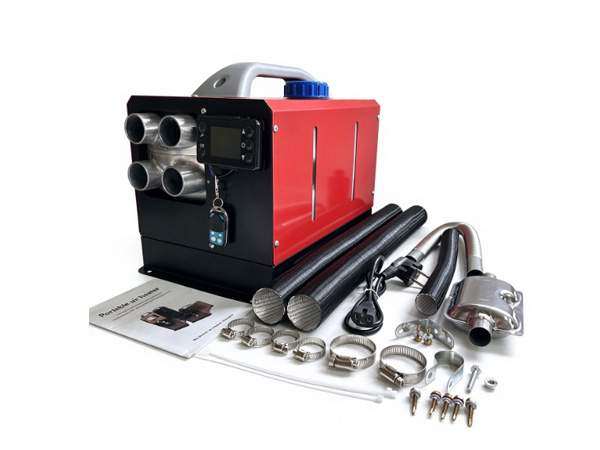
Note: The types and quantities of accessories can be adjusted according to customer require...
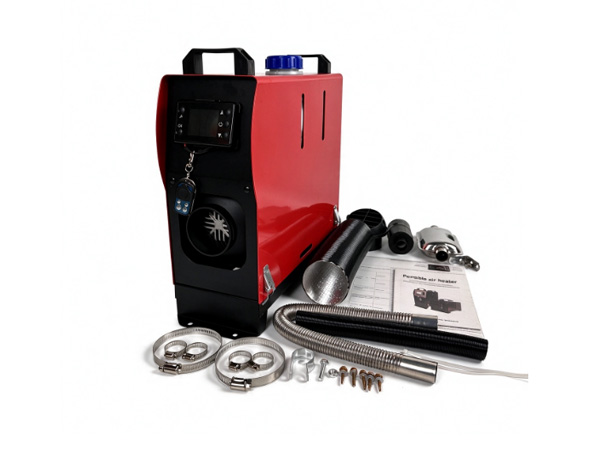
Diesel air heater 5KW/8KW Product Usage: Used for heating small spaces, suitable for small ...
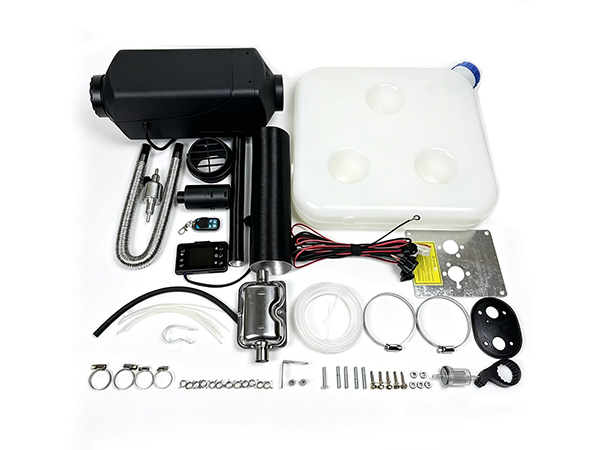
Product Specifications: Rated voltage:12V/24V/12V-24V Rated current:16A Thermal power:...